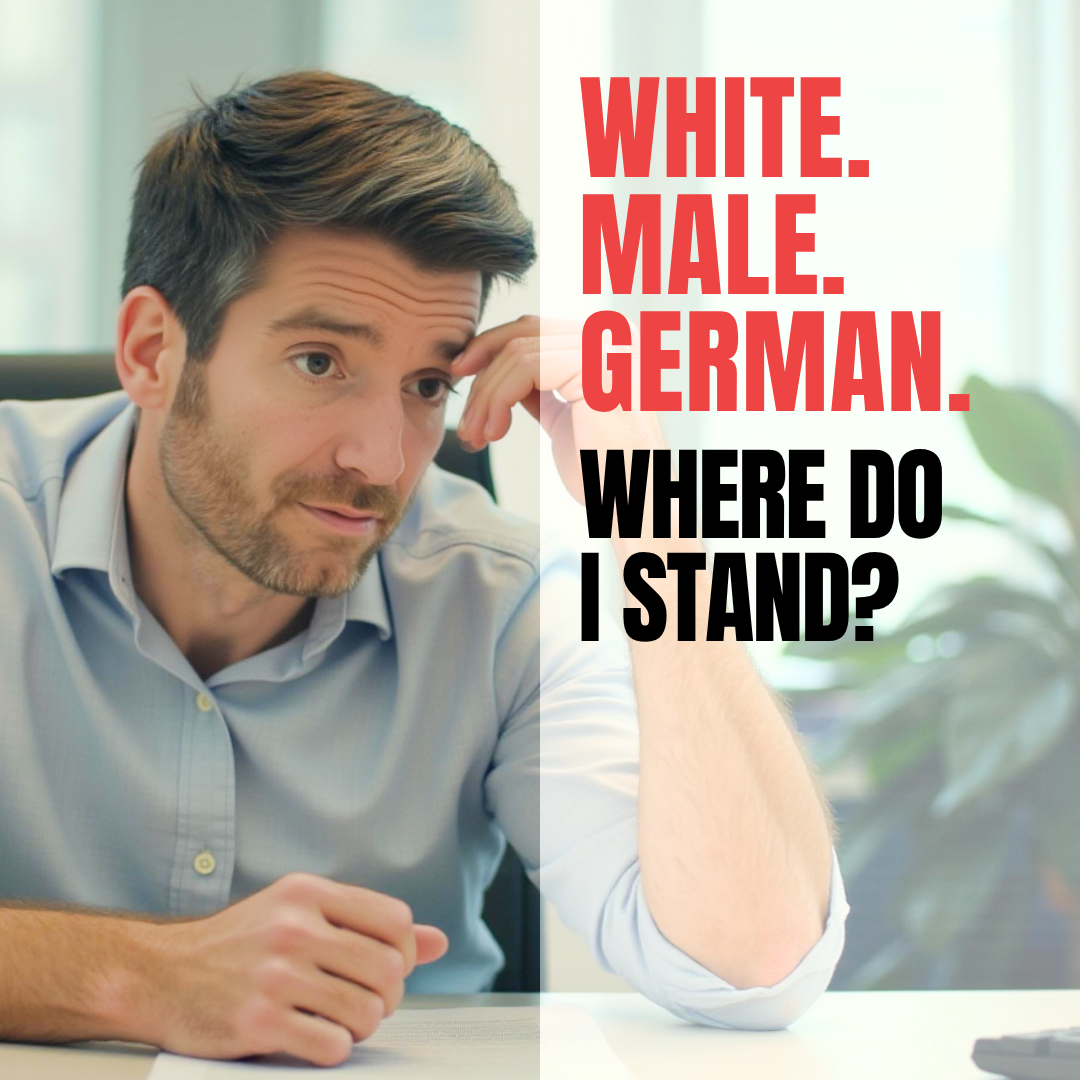
Everyone asks this question at some point,
in their career, in their life, in their family.
But for me, it was never a question of arrival.
I never had to locate myself in a country that calls for skilled workers,
but doesn’t make it easy for them.
For many who come here, it’s different.
The question of where they stand is not abstract,
it shapes their everyday life.
In the queue at an office,
in the silence of waiting for a reply,
in the uncertainty of whether they are welcome, or just tolerated.
It is concrete, urgent, existential.
Am I already included, or still at the edge?
Do I already belong, or not yet?
We often act as if information is enough.
Forms, flyers, websites.
But none of these answer the deeper question: Where am I in this journey?
Because orientation is more than information.
It is recognition,
it is reflection,
it is being seen.
Maybe that’s the difference we still overlook.
What would it take to notice it more clearly?
To mirror where someone stands,
to translate rules into next steps,
to make barriers visible instead of invisible.
Small, practical moves,
that make the journey readable,
and the person visible.
Where do I Stand?